Dunes
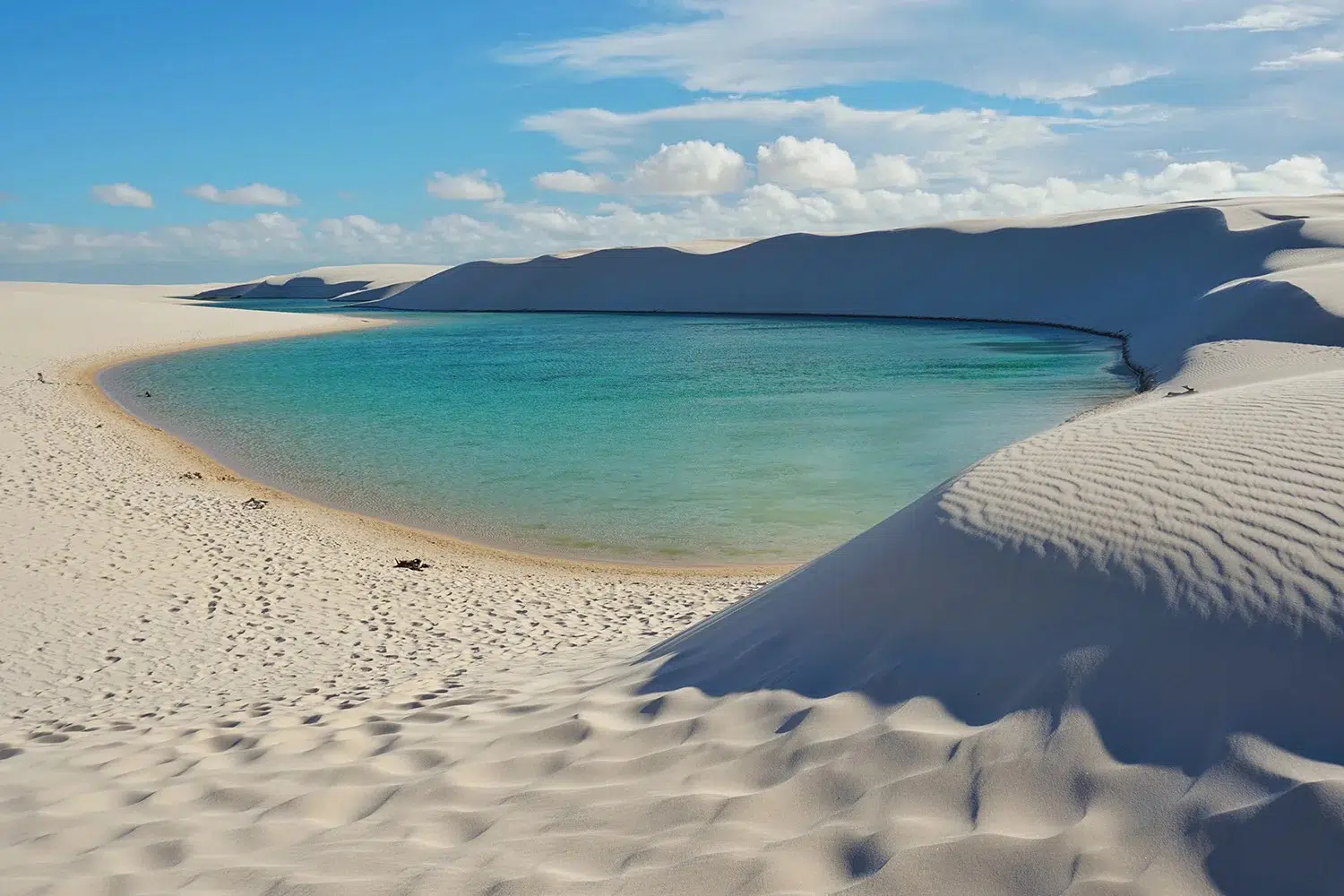
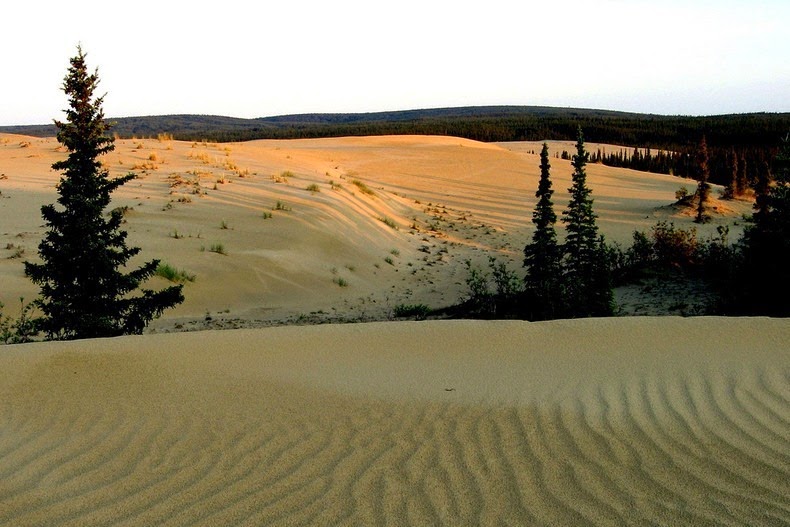
Wind-shaped ridges of loose sand, actively migrating rather than fixed in place — diagnostic features are the asymmetric profile (a longer, gentler windward slope facing the prevailing wind, and a shorter, steeper leeward slip-face on the far side) and the crescent or wave-form ridge patterns wind produces, plus the absence of anything anchoring the sand permanently in place.
Hot Desert
Wind-shaped sand ridges stretch to the horizon; footing loose and shifting, no reliable landmark holds still.
Arid
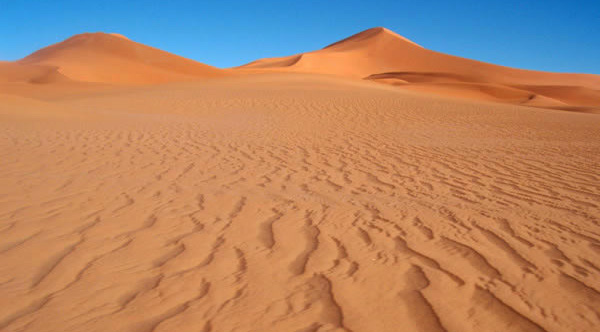
Bare, sun-bleached sand, nothing green in frame — reach for this when the scene should feel hostile or empty.
Location: Murzuq, southwest Libya